

Setting up a hearing aid at home is easy. Adjusting it at a busy dinner table is harder. When the room gets loud, can you turn the volume down with the aids still in your ears, using a button, a remote, or your phone? That’s the first question we ask in this comparison.
We compare hearing aids for seniors who want simple controls and focus on daily tasks. For each model, we cover how to change the volume and listening modes, the setup required, and how the aids charge. We also note the price, whether it covers one aid or a pair, and the adjustment support available.
Start with the comparison table below. If you’d rather keep your phone in your pocket, check the phone-free volume control column first. Then read the reviews for details like where the button sits and whether each ear adjusts separately.
Hearing Aids Compared
Use the table to narrow your choices. If family will help with setup, check Phone needed for setup? and Change volume without a phone? separately. Help once is fine, but you want to handle daily adjustments yourself.
| Brand or retailer | Example model | How you adjust the device |
| Chosgo | SmartR | Small onboard controls, no app. |
| Otofonix | Elite | Physical volume rocker. |
| iBstone | Nova B2 | One button controls volume and modes. |
| Vivtone | Lucid508 | Hold the button to switch modes. |
| Coniler | Bluetooth RIC | No app, so check that the buttons work. |
| Ceretone | Core One Pro | Adjust volume with the aids out of the case. |
| Hear Better | NewSound Mini Rocker | A physical rocker handles volume and programs. |
| Audien | Atom X | Touchscreen charging case. |
| LINNER | Mercury | Physical controls on each aid. |
Test the controls before the return window closes: adjust the volume, remove the aids, and charge them yourself. If you can’t, send them back.
Chosgo SmartR
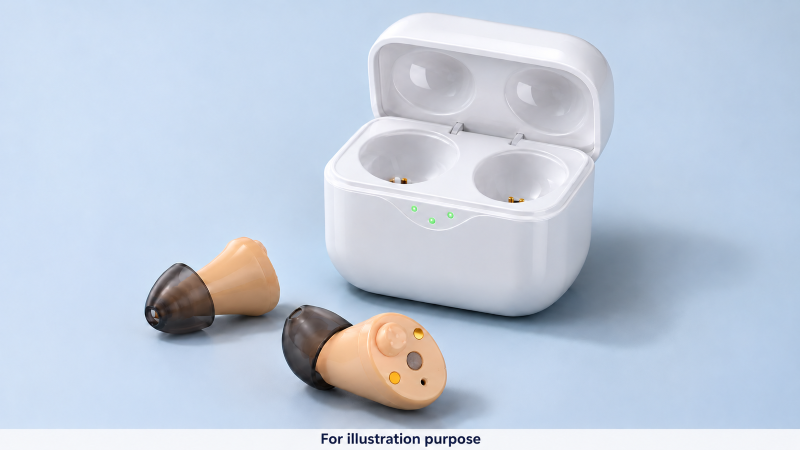
Best for a discreet in-ear fit with no app.
Quick verdict
The Chosgo SmartR is a rechargeable, over-the-counter hearing aid that sits inside the ear canal. It has adjustable volume and four listening programs, and it needs no smartphone app for setup. The trade-off is size: an aid that’s hard to see can also be hard to grip and adjust. This assessment is based on Chosgo’s product documentation.
Pros
- Nine volume levels and four listening programs.
- No smartphone app to install or pair.
- Portable magnetic charging case.
Cons
- Small controls may be difficult to locate by touch.
- Chosgo’s return policy makes the buyer responsible for return shipping.
Controls and everyday use
Chosgo lists four listening programs: quiet, social gatherings, noisy settings, and restaurants. But if simple controls matter most, test the volume first, with the aids in your ears.
Check whether you can find the control by feel, and return to your usual setting if you go too high. Chosgo’s product page lists nine volume levels but doesn’t make the button sequence clear, or say whether the aids remember your settings after charging. Confirm both before you rely on them.
Fit and Charging
- The SmartR sits fully inside the ear canal.
- Both aids charge together in the magnetic case.
- Chosgo claims about 20 hours of use per two-hour charge.
- During the trial, practice removing both aids and seating them in the case under your usual evening lighting.
Chosgo Hearing Aid Pricing
Chosgo’s advertised U.S. prices range from $99 to $749 per pair, including promotions.
Trial, Warranty, and Support
- You get a 45-day trial and a one-year warranty.
- A video guide covers the SmartR basics.
- Keep the original packaging and all accessories during the trial, since missing items may cost you a restocking fee.
Otofonix Hearing Solutions

A solid pick if you want physical volume controls.
Quick verdict
Otofonix suits you if you want to adjust volume right on the hearing aids. The Elite and Encore use replaceable batteries, and the rechargeable Groove adds optional smartphone controls. All three have physical rocker switches.
The catch: you have to reach behind your ear to adjust the volume.
Pros
- The Elite, Encore, and Groove all have on-device volume control.
- You can choose replaceable batteries or a rechargeable model.
- Otofonix offers setup help by phone or email.
Cons
- With glasses on, the rocker switch can be hard to reach.
- Check whether a listed price covers one hearing aid or a pair, since many listings show only the single-aid price.
Controls and everyday use
The Elite has four listening settings and a rocker switch for volume. The Groove adds a second option: use the physical switch, or open the Otofonix app to change volume, switch programs, and create sound profiles.
Planning to use the app? Check our smartphone compatibility guide first.
Fit and Charging
- The Elite takes size 312 batteries, which Otofonix estimates last five to eight days.
- The Groove is rechargeable, with a listed 15 to 18 hours of battery life.
- If you choose the Elite, practice swapping in a fresh battery yourself during the trial.
Otofonix Hearing Aid Pricing
- Advertised U.S. prices run from $197 to $449, with Elite and Encore pairs at $397 each.
Trial, Warranty, and Support
- You get a 45-day return window from the purchase date. To return them, request a return authorization and keep the original packaging and any unused accessories.
- A one-year limited warranty covers defects in materials and workmanship.
- Otofonix provides model-specific manuals plus phone and email support.
During the trial, test the volume with the aids in and your glasses on. New to OTC hearing aids? Read the FDA’s guide to OTC hearing aids first.
iBstone Hearing Aids
Quick verdict
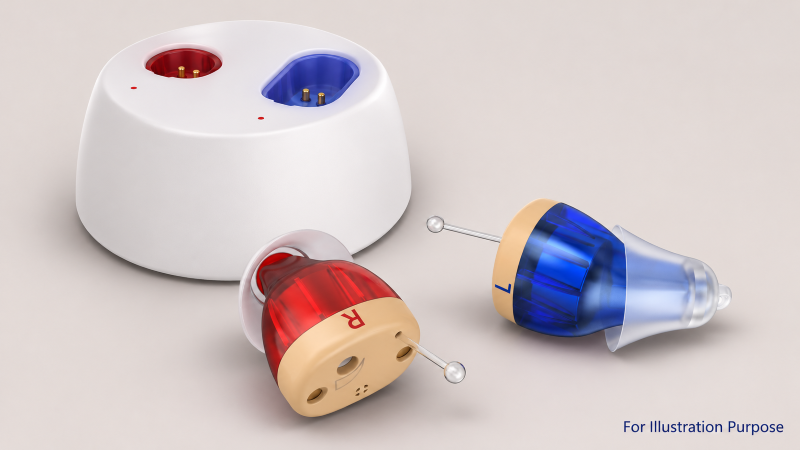
iBstone suits you if you want rechargeable hearing aids with a choice of controls. The K17 keeps things simple with a physical button and one listening setting. The K21 adds four settings with touch controls, and the AuraLink adds Bluetooth streaming and app adjustments.
Want a button you can feel? Start with the K17 and Nova B2, based on iBstone’s product documentation.
Pros
- The K17’s color coding, blue for left and red for right, prevents mix-ups.
- The Nova B2 has volume and listening modes on a button right on the device.
- The K21’s portable charging case doubles as a backup battery.
Cons
- The K17 has only one listening setting, so it lacks a noisy-room preset.
- The K21 uses touch controls, so if you want a button you can feel, test it during the trial.
Controls and everyday use
Want fewer settings to manage? Pick the K17. Want more control? The Nova B2 lets you change the volume and listening mode right on the device.
Fit and Charging
- The K17 sits fully inside the ear canal and recharges in its base.
- The K21 sits in the ear canal and comes with a portable charging case.
- During the trial, practice removing each aid and placing it back in its charging slot until it feels easy. The NIH guide to hearing aid styles explains why small canal aids can be harder to adjust and remove.
iBstone Hearing Aid Pricing
- Expect to pay $149 to $649 per pair in the U.S., promotions included.
Trial, Warranty, and Support
- iBstone advertises a 45-day trial and a one-year warranty for the K17. Ask support when the trial clock starts before you order, since the product page and return policy give different start dates.
- To return a pair, contact support first for authorization and keep the original packaging and accessories. You may also pay return shipping if you change your mind.
- Support answers by phone and email.
Vivtone Hearing Aids
Verdict
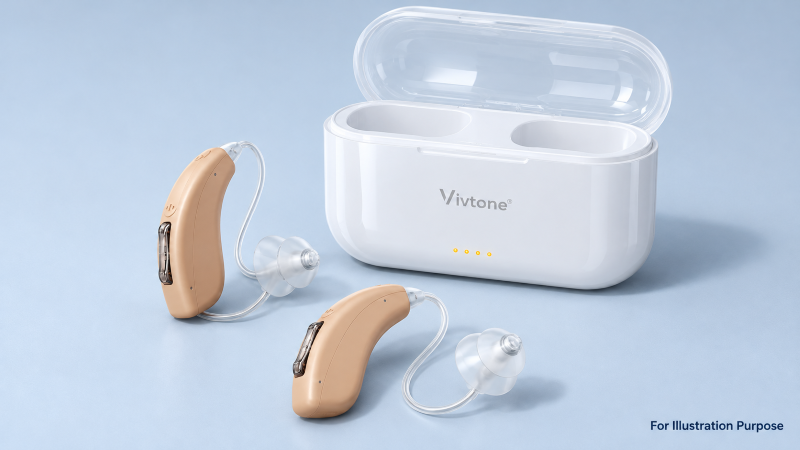
Vivtone makes rechargeable hearing aids in styles ranging from the compact SuperMini to the behind-the-ear Lucid508. For simple controls, start with the Lucid508: it has onboard volume adjustment and three listening modes, and it doesn’t need a smartphone app.
The Xpure adds app customization and streaming, but only if you’re happy managing more settings. This verdict draws on product documentation.
Pros
- The SuperMini and Lucid508 have onboard volume control.
- Styles include in-ear and behind-the-ear.
- Rechargeable models include a charging case or dock.
Cons
- Controls and modes vary by model, so confirm your exact version before ordering.
- Vivtone’s pages disagree on when the 45-day return window starts. Confirm your deadline before you buy.
Controls and Everyday Use
On the Lucid508, hold the control button for three seconds to switch listening modes. Vivtone says the aids remember your volume and mode after 15 minutes of use, so once you find a comfortable setting, you may rarely need to touch it again.
During the trial, practice switching modes while wearing the aids, and learn the difference between a short press and a three-second hold. If the technical terms trip you up, our plain-English guide to hearing device specifications breaks them down.
Fit and Charging
- The SuperMini sits inside the ear canal, while the Lucid508 rests behind the ear and sends sound through a thin tube to an ear tip.
- Vivtone estimates about 30 hours of Lucid508 use per two-hour charge.
- Unsure both aids are seated properly in the charger. If they still lose power, ASHA’s troubleshooting guide covers what to check.
Vivtone Hearing Aid Pricing
- Advertised U.S. prices run from $249 to $649 per pair, including promotions.
Trial, Warranty, and Support
- Vivtone offers a 45-day trial and a one-year warranty.
- Get a return authorization before shipping anything back.
- If you return the aids by choice, you pay return shipping.
- Phone support is weekdays only; email is open around the clock.
Heads up: Vivtone’s FAQ counts the return window from purchase, but its return policy counts from receipt. Confirm which date applies before you buy.
Coniler Hearing Aids

Quick Verdict
Coniler sells inexpensive rechargeable hearing aids in in-ear, behind-the-ear, and receiver-in-canal styles. Its Bluetooth RIC model offers four listening modes and six volume levels through the Coniler app, so it suits anyone comfortable adjusting settings on a smartphone.
But the published specs leave gaps in compatibility and controls. This review relies on product documentation alone.
Pros
- Rechargeable models in several wearing styles.
- Adjust volume and modes from the app on select models.
- Manuals and setup videos cover each model.
Cons
- Some listings say “hearing aid,” and others say “hearing amplifier,” so check which one you’re buying.
- Coniler doesn’t list which phone operating systems the app supports.
- The clip-on model’s listing contradicts itself on streaming.
On a budget? See our guide to affordable hearing aids for seniors for more options.
Controls and Everyday Use
The Bluetooth RIC model lets you adjust volume, switch listening modes, and personalize sound through the app. But what if your phone isn’t within reach? Before ordering, ask whether the physical controls alone cover your usual adjustments, since the published description doesn’t spell out every button function.
One button may handle several jobs depending on how long you press it. During the trial, practice adjusting the volume and returning to your preferred setting, and ask support for instructions for your exact model before relying on settings memory.
Fit and Charging
- The Bluetooth RIC model sits behind the ear, with the receiver in the ear canal.
- Several ear-tip sizes are included, so you can find a snug fit.
- Coniler quotes 15–20 hours per charge.
- Charging-case backup varies by version, so check the spec for yours.
Coniler Hearing Aid Pricing
- Advertised U.S. prices range from $35 to $199, including promotions. Listings mix single devices and different configurations, so confirm exactly what’s in the box before you order.
Trial, Warranty, and Support
- Returns are accepted within 60 days of delivery, but only after 15 consecutive days of use.
- Returns require an authorization, the original packaging, and every accessory.
- Return shipping is on you, and we may dock damaged or incomplete returns.
- Every unit carries a one-year limited warranty against manufacturing defects.
- Support is email-only, with model-specific setup guides.
Helpful note: Coniler’s listings leave compatibility and streaming unclear. Confirm both before recommending it.
Ceretone Hearing Aids
Quick Verdict
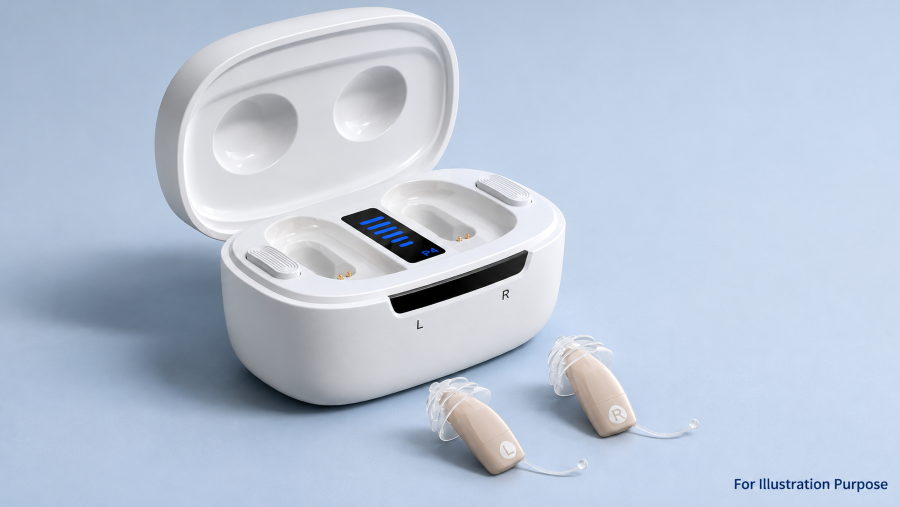
Ceretone offers compact in-ear and behind-the-ear aids. To skip the phone, look at the Core One Pro, which sets volume from its charging case.
The catch is practical: to change the volume, you have to take the aids out and put them back in the case. The Beacon, by contrast, offers app-based customization and Bluetooth streaming. This assessment is based on product documentation.
Pros
- The Core One Pro needs no smartphone app.
- Its charging case lets you set each ear’s volume separately.
- The lineup spans several wearing styles and price points.
Cons
- To change the volume on the Core One Pro, you must remove the aids.
- Its small size can be hard to handle.
- Ceretone’s advertised trial periods conflict with its published refund policy.
Controls and Everyday Use
The Core One Pro’s case displays the volume level as you adjust it. To switch listening programs, double-tap the ear with a flat hand, or hold the case’s control button for three to five seconds with the aids inside.
Practice this sequence during the trial, before wearing the aids all day. Can you live with carrying the case and removing the aids every time you want to change volume?
The original Core One uses app-based controls instead, so confirm the exact model name before comparing or buying.
Fit and Charging
- The Core One Pro sits in the ear canal and includes several ear-tip sizes for a better fit.
- Ceretone advertises up to 20 hours per charge.
- Charging takes about two hours.
- With the case, advertised total use reaches about 80 hours.
Ceretone Hearing Aid Pricing
- Advertised U.S. prices run from $129.99 to $499 per pair, including promotions.
Trial, Warranty, and Support
- Product pages promise a 100-day trial, but the refund policy says 60 days from receipt. Get the real number in writing before you order.
- Returns require at least 25 days of use first.
- Returns also require an authorization, the original packaging, and every accessory.
- Eligible returns ship free, and a one-year manufacturer’s warranty applies.
- Phone and email support runs on weekdays.
Note: The trial period is still unverified.
Hear-Better Hearing Aids
Quick Verdict
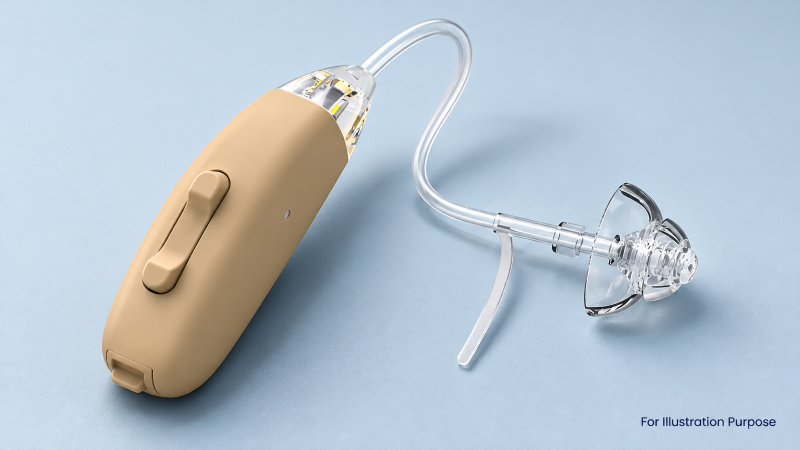
Hear-Better is a retailer, not a manufacturer, carrying brands such as NewSound and Siemens/Signia. Some models have physical controls, like the NewSound Mini Rocker’s volume and program rocker switch.
Caution: confirm the model, fitting requirements, and whether the price covers one device or a pair in the retailer’s documentation.
Pros
- Compare several manufacturers and wearing styles in one place.
- Some have physical volume controls.
- Replacement tubes, tips, and batteries are sold too.
Cons
- Check whether the price covers one aid or a pair.
- Some controls need a small tool.
- The homepage promises “no questions asked” returns, but the real conditions are stricter.
Controls and Everyday Use
The Mini Rocker 202 has four listening programs and a rocker switch. Per its listing, holding volume-up for three seconds changes the program, so test that in your ear before buying to see if it feels manageable.
Other models work differently. The TACTear, for example, has concealed volume trimmers, so ask how to adjust it before you order.
Some listings are for severe hearing loss, so review the fitting and prescription rules in the FDA’s hearing aid buying guidance first.
Fit and Charging
- The Mini Rocker 202 is a behind-the-ear aid with a thin sound tube.
- The device uses a size 10 disposable battery.
- The box holds one aid, two tubes, spare tips, a battery, and a case.
- Some other models recharge.
Hear-Better Hearing Aid Pricing
- Prices on the models I checked run from $58.98 to $199.98, generally per device. That’s a sample, not the full catalog.
Trial, Warranty, and Support
- Returns are accepted within 60 days of purchase.
- Returns within 21 days may carry a 10% restocking fee.
- Returns require a return authorization, the original packaging, and all included accessories.
- General terms cover defects for 90 days, with repair provisions after that. Confirm your model’s warranty before buying.
Heads up: The Mini Rocker listing appeared in search, but its page returned an error when I tried to open it. Confirm it’s still for sale before you publish.
Audien Hearing Aids

Quick Verdict
Audien offers several ways to manage everyday adjustments. Its Atom X uses a touchscreen charging case for volume and listening modes, while the Ion IQ provides app-based customization and onboard controls. The Atom Pro 2 offers four listening modes in a compact in-ear design. For readers who prefer visible controls, the Atom X is the most relevant model to compare. This assessment is based on product documentation.
Pros
- The Atom X lets you change volume and modes without a smartphone.
- The lineup includes in-ear and behind-the-ear designs.
- A one-year limited warranty covers manufacturing defects.
Cons
- Atom X users need to carry the case for touchscreen adjustments.
- Some discounted bundles include a subscription that renews automatically.
- Returns require a phone consultation or video appointment before authorization.
Controls and Everyday Use
The Atom X touchscreen shows your volume and listening settings. Its four modes are Comfort, Conversation, Crowd, and TV. During the trial, check whether you can read the screen and select the intended setting comfortably.
Choose the version carefully. Audien distinguishes the standard Atom X from the Atom X Connect, which adds Bluetooth calls and music streaming. Want the basics on the Atom range? Read our guide to how the Audien Atom Pro hearing aids work.
Fit and Charging
- The Atom models sit inside the ear. The Ion models sit behind the ear.
- The Atom Pro 2 includes a rechargeable case and removal filaments.
- Keep those filaments intact and practice using them during the trial.
- Follow the charging instructions for your exact model. Battery figures that include case recharges reflect total available use, not continuous wear.
Audien Hearing Aid Pricing
- Advertised U.S. prices range from approximately $78 to $689 per pair, depending on promotions and bundle selection.
Trial, Warranty, and Support
- Direct purchases include a 45-day trial from the delivery date.
- Obtain return authorization and keep all packaging and accessories.
- A one-year limited warranty covers manufacturing defects.
- Some bundles include one free month of AudienCare, followed by $9 monthly until canceled.
- Phone and email support are available. For practical trial questions, see the FDA’s hearing aid buying guidance.
Important note: current promotional pages show several bundle prices. Confirm the final price and subscription selection before adding your affiliate offer.
LINNER Hearing Aids

Quick Verdict
If you want rechargeable hearing aids with onboard controls, compare LINNER’s Saturn and Mercury. Saturn sits inside the ear canal, while Mercury rests behind the ear and has tactile buttons you can find by touch.
The catch is the return policy: LINNER advertises a 45-day trial, but its documentation allows only partial refunds after 30 days.
Pros
- Both Saturn and Mercury have onboard controls.
- Both models recharge and come with a portable charging case.
- Offers in-ear and receiver-in-canal styles.
Cons
- Mercury lacks Bluetooth streaming.
- You cover return shipping.
- After 30 days, refunds are partial.
Everyday Controls
Mercury offers three listening modes and physical buttons. Before ordering, request the current manual and confirm what a short press does versus a long hold. During your trial, practice adjusting each aid while wearing glasses.
Saturn has a single multifunction button, and its smaller body makes handling a real test. Use our hearing device usability checklist to test insertion, removal, volume, and charging.
Fit and Charging
- Mercury sits behind the ear, with a thin wire to the ear tip.
- LINNER claims 20 hours of use per two-hour charge.
- Ten minutes of charging reportedly gives about two hours of use.
- Practice seating both aids in the case and reading the charging lights.
LINNER Hearing Aid Pricing
- Saturn, Saturn 2, and Mercury sell in U.S. stores for $99.99 to $299.99 per pair.
Trial, Warranty, and Support
- You have 45 days from delivery to return it.
- After 30 days, only partial refunds apply, so get the full-refund deadline in writing.
- Keep the box and your receipt.
- A 12-month warranty starts on the date you receive it.
- Get return approval from support before shipping anything.
Note: Current store data lists Mercury at $299.99, though an older page still shows $229.99. Return terms come from LINNER’s published policy.
Choosing Hearing Aids With Simple Controls
Test your most frequent task first, while wearing the aids. If that’s volume, start there.
Pick Your Controls
- Onboard buttons: Ensure you can find and press them by touch.
- Charging-case controls: Check whether you must remove the aids to adjust them.
- App controls: Try the app on your own phone and check that the text and menus are easy to read.
Try the Daily Routine
During the trial, repeat these tasks yourself:
- Tell left from right.
- Insert and remove both aids.
- Adjust the volume, then reset it.
- Charge both aids.
- Clean with the supplied tools.
Does someone help? Ask for one demonstration, then repeat the steps yourself.
Check the Return Terms
Confirm these before paying.
- When does the trial start?
- When is the request deadline?
- When must the aids arrive back?
- Who covers return shipping?
- Any restocking or subscription fees?
Keep the answers, receipt, packaging, and accessories together, and start testing early so you can ask for help before the deadline.
Choosing a phone to pair with your hearing aids? Our Android vs. iPhone guide for seniors compares controls, accessibility, and ease of use.
Final Thoughts: Choose Aids You Can Handle
The best hearing aids for seniors with simple controls fit easily into daily life. Ask yourself three things: Can you change the volume, select a listening mode, and recharge the aids on your own? If so, the model is practical.
Start with the controls you’ll actually use. Physical buttons adjust the aids directly; a charging-case screen is easier to read; and an app lets you fine-tune the sound. Check how your model works and whether you must remove the aids to adjust them.
Treat the trial as a test of both listening and handling. Try the aids at home, in front of the television, and in the places you visit most, and note every difficulty so you can ask for help early. Before you pay, confirm the return deadline, fees, warranty coverage, and any subscription charges.
Pick the model that fits your hearing, budget, and routine. If a control or cleaning task still feels like a struggle after practice, return the aids while you can. A routine you can manage beats a long list of features.