
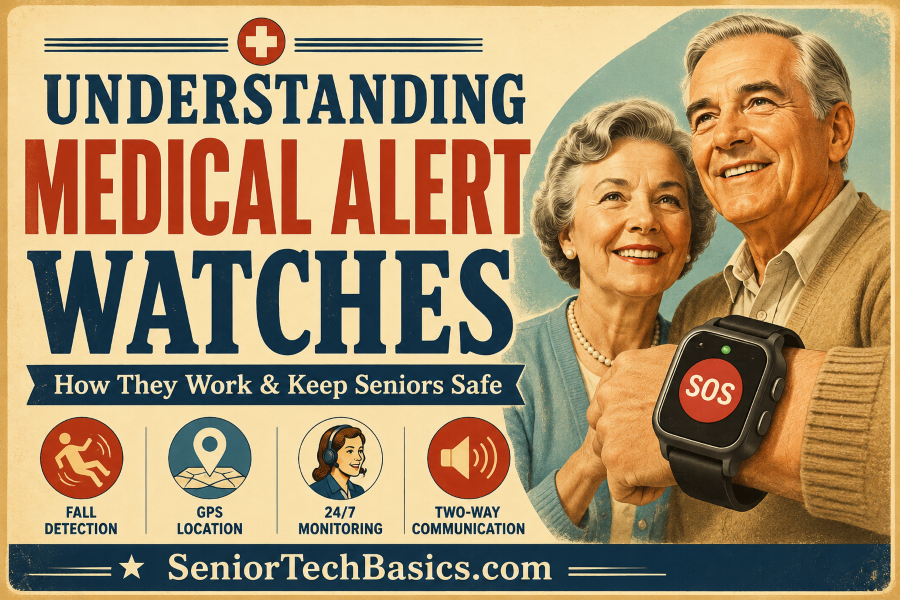
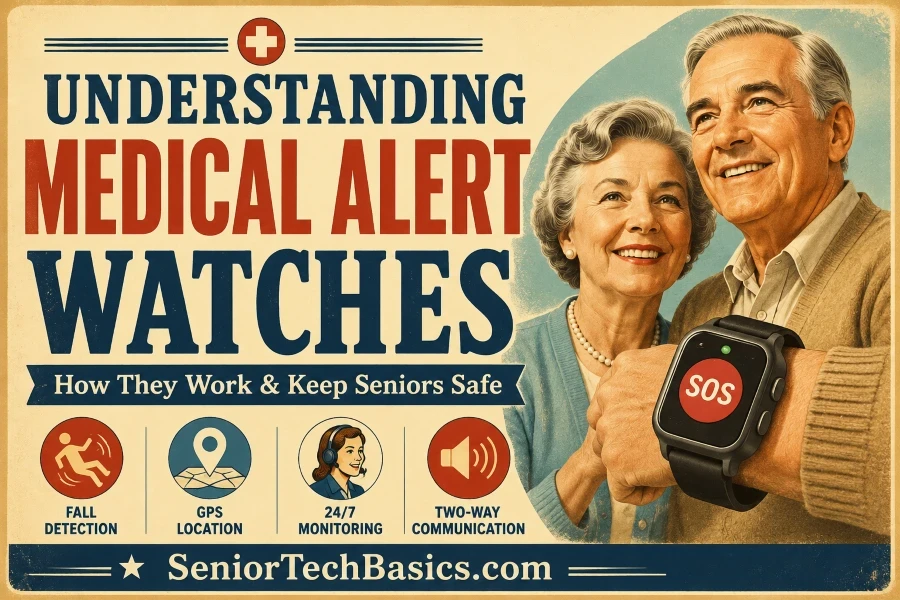
Medical alert systems have evolved from simple wall-mounted buttons to sleek smart wearables with GPS, fall detection, and two-way communication, making them more comfortable to wear.
They provide great peace of mind, but the technical jargon can quickly become confusing. Manufacturers often use terms like geofencing and monitored dispatch without clearly explaining how these features help in an actual emergency.
This guide simplifies the marketing jargon by clearly explaining what those features mean, how they work, and what you should focus on.
What Defines a ‘Smart’ Medical Alert?
Traditional medical alerts used a bulky plastic button connected to a base station plugged into your kitchen wall. If you passed by the driveway, help was unavailable.
Today’s smart wearables are fully portable. Whether resembling a stylish smartwatch like KOSPET Tank T3 Ultra 2 GPS Smart or a subtle pendant, they combine multiple safety features into a single device by integrating:
- One-touch SOS buttons for immediate human contact.
- GPS tracking ensures emergency responders can pinpoint your exact location.
- Automatic fall detection that alerts help even if you’re unconscious.
- Integrated speakers enable live, two-way communication from any location with cellular coverage.
Watch vs. Pendant: Which Style Wins?
Both styles provide quick help, but they cater to very different lifestyles.
The Medical Alert Watch: Worn on the wrist and resembles a regular smartwatch, helping to remove the stigma of looking like medical devices that some seniors dislike. It’s ideal for active adults who want both fitness tracking and safety features.
The traditional pendant: Worn around the neck. It is simpler, offers a much longer battery life (often months instead of days), and is easier to press in a sudden panic.
The bottom line: Choose the watch for an active, tech-savvy senior, or opt for the pendant if nightly charging is inconvenient.
Medical Alert Watch vs. Smartwatch (Apple/ Galaxy).
Although smartwatches and medical alert devices appear the same on the wrist, they serve entirely different purposes.
The Standard Smartwatch (Apple/Galaxy):
- Main Focus: entertainment, apps, and fitness tracking.
- Emergency Response: If a fall is detected, it dials 911 directly.
- The Risk: Unintentional triggers, such as dropping the watch, could immediately send a costly ambulance to your house.
The Dedicated Medical Alert Watch:
- Main Focus: Ensuring personal safety and providing immediate emergency assistance.
- Emergency Response: Provides immediate connection to a 24/7 dedicated monitoring center.
- Benefit: Operators know the user’s medical history, contacts, and home lockbox codes. They can initially assess the situation and reach out to a nearby neighbor or family member, helping prevent unnecessary emergency responses.
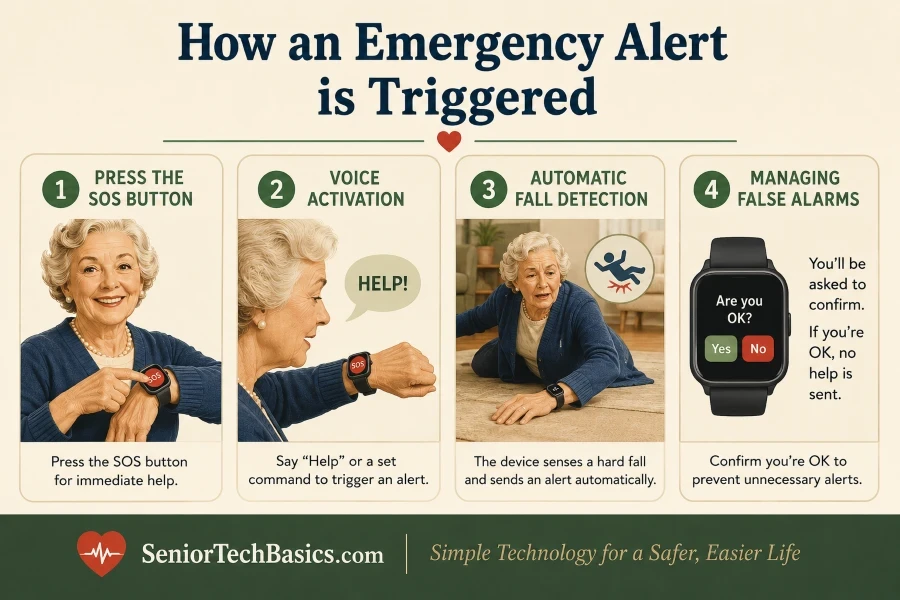
How an Emergency Alert is Triggered.
Smart wearables summon help even when the user cannot physically do so. They usually activate an alert through three different methods:
Manual Activation (SOS / Help Button).
- What it is: The physical button on the device (often labeled SOS).
- How it works: Pressing and holding the button instantly connects the wearer to a monitoring center or designated emergency contact.
- Voice Activation: Some modern devices also allow users to trigger a call simply by speaking a command if they cannot reach the physical button.
Automatic Fall Detection.
- What it is: Sensors built into the device (accelerometers and barometric sensors) detect sudden shifts in speed, direction, and altitude.
- How it works: If the device detects a strong impact and subsequent immobility, it will automatically summon assistance, even if the wearer is unconscious or disoriented.
- The Reality: It should always be considered a backup safety measure. No fall detection system is perfectly accurate, and sometimes they can miss gentle or slow falls.
Managing False Alarms.
- The Issue: Sudden movements, such as dropping the device or clapping forcefully, can sometimes be mistaken for a fall.
- The Fix: Occasional false alarms are typical in the technology. To avoid unwanted dispatches, devices include a short delay (typically 15 to 30 seconds) that allows the user to manually cancel the alert before contacting an operator.
What Happens After an Alert?
The device quickly executes three actions when an emergency happens:
Two-Way Talk.
- The Action: The device functions as a wearable speakerphone.
- The Benefit: A live operator communicates directly through the device, allowing the user to talk hands-free without using a phone.
Live GPS Tracking.
- The Action: The device quietly sends its current location in real time.
- The Benefit: If the user is confused or outdoors, responders know precisely where to go.
Shower Protection (Water Resistance).
- The Action: The device remains on during baths and showers.
- The Benefit: Most falls among seniors occur in the bathroom. Water resistance helps maintain safety during high-risk moments.
Who Responds to the Call?
Pressing the button is only the first step; afterward, the system directs the alert to the appropriate person based on the severity of the situation.
The 24/7 Monitoring Center.
- Who they are: Safety operators are on duty 24/7.
- What they do: They immediately respond to the call, retrieve the user’s medical history, and evaluate the situation using the speaker.
- The priority: They assess whether the user only needs a neighbor’s assistance or whether flashing lights are necessary.
Emergency Contacts and Caregivers.
- Who they are: Family members, friends, neighbors, or professional caregivers.
- What they do: For minor incidents, such as a slip without injury, the operator initially contacts this custom list.
- Smart alerts: Many systems instantly send text messages or app notifications to family members as soon as a button is pressed, ensuring everyone stays informed.
Emergency Dispatch.
- Who they are: Local ambulance, fire, or police services.
- What they do: If the user is unresponsive or severely injured, the operator skips notifying the family and instead sends local first responders directly.
- The benefit: Operators provide paramedics with the user’s home lockbox code, allowing them to enter without having to force the door.
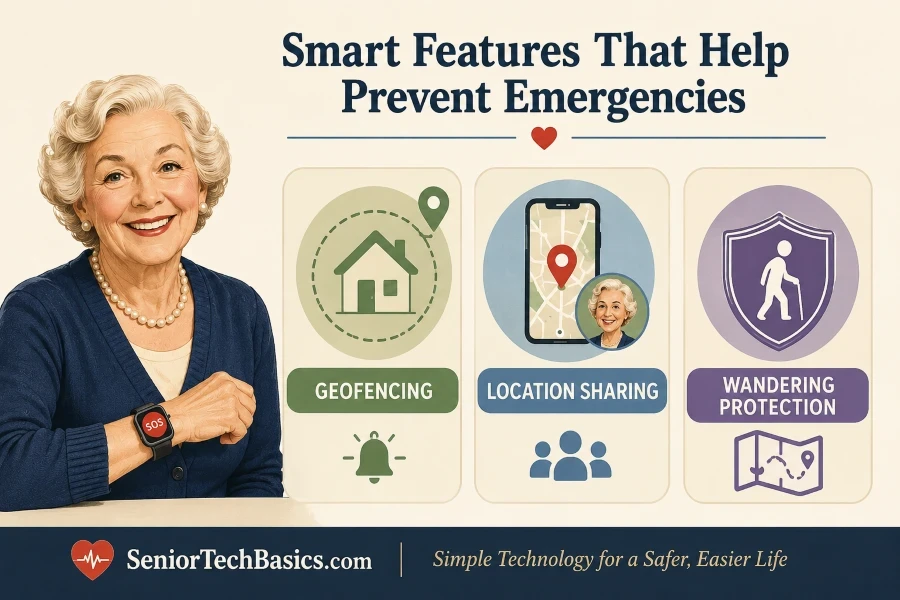
Smart Features That Prevent Emergencies.
Some features not only assist after an injury but also play a key role in preventing disasters. These tools are especially vital for seniors experiencing memory loss or dementia.
Geofencing (Virtual Boundaries).
- What it is: Using a mobile app, you create a digital boundary around a designated area, such as a home or neighborhood.
- How it works: The system immediately alerts family members if the user goes beyond that boundary.
Location Sharing and Wandering Protection.
- What it is: Real-time tracking that integrates GPS technology with caregiver applications.
- How it works: Families can access an app anytime to see precisely where their loved one is walking.
- The Benefit: If a senior becomes confused or wanders off, family members can quickly locate them, reducing search times from hours to minutes.
Who Needs a Smart Wearable?
These devices can be game-changers for five specific groups, though not every senior needs a mobile medical alert device.
- Seniors Living Alone: Offers immediate safety support when no one else is available at home to assist.
- On-the-Go Seniors: Ideal for older adults who enjoy walking, gardening, shopping, and traveling beyond the reach of a standard home base station.
- Anyone at Fall Risk: Especially important for individuals with a history of slips or balance problems, largely due to automatic fall detection.
- Seniors with Chronic Conditions: Offers peace of mind for those managing unpredictable health issues like heart conditions, diabetes, or severe asthma.
- Individuals with Memory Loss: Provides families with tracking tools, such as GPS and geofencing, to help safeguard loved ones prone to confusion or wandering.
The Bottom Line: A smart wearable is an ideal option if you want to stay active and independent while having the security of help at your fingertips.
New to terms such as GPS, wearable technology, and cellular connectivity? Our Guide To Technology Terms For Seniors provides simple explanations designed specifically for older adults.
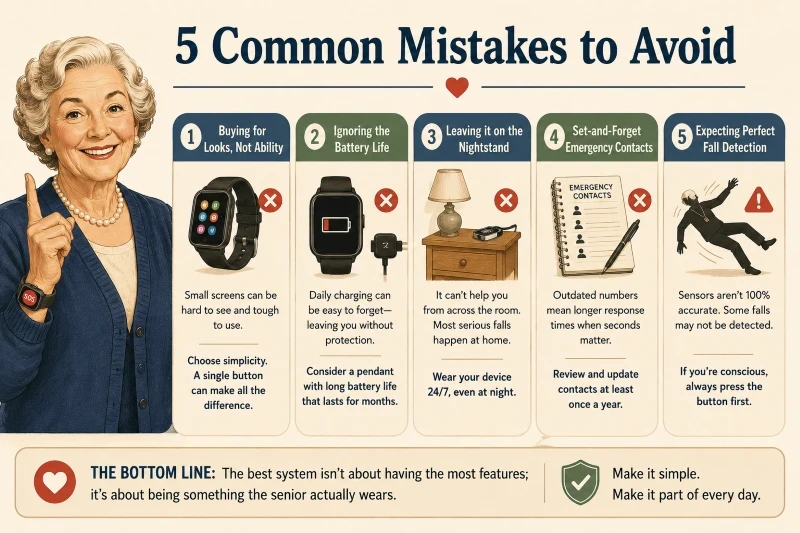
5 Common Mistakes to Avoid.
Choosing the wrong device results in a key issue: seniors often stop wearing it. Be aware of these five common mistakes:
- Buying for Looks, Not Ability: A sleek smartwatch looks appealing, but its small touchscreen can frustrate users with arthritis or poor eyesight. If navigating features becomes too cumbersome, opt for a simple pendant with a single button instead.
- Ignoring the Battery Life: Many smartwatches need to be fully charged every night, making them unusable if a senior forgets to plug them in. For those who find charging routines difficult, a battery-powered pendant that lasts for months is an option.
- Leaving it on the Nightstand: A medical alert can’t save a life from across the room. Many seniors wear their devices only when leaving the house, yet most serious falls happen at home, especially during late-night bathroom visits. Make sure your device stays on.
- Set-and-Forget Emergency Contacts: Phone numbers and caregiver schedules can change over time. If the monitoring center attempts to call a family member whose number has changed in the past year, critical rescue time is lost. Review and update contact information annually.
- Expecting Perfect Fall Detection: No sensor is perfectly accurate. Slow, sliding falls, like slipping out of a wheelchair, or gentle landings, might not trigger the automatic sensor. Users should always try to press the manual button first if they are conscious.
The Bottom Line: The best system isn’t about having the most features; it’s about being something the senior actually wears.
You can also read the Simple Guide to Top Emergency Alert Devices for Seniors to compare popular options.
Smart Wearable Medical Alert Systems FAQs.
Do I need a smartphone to use a medical alert watch?
No. Most dedicated medical alert watches come with built-in cellular SIM cards, allowing them to operate independently.
Can I wear it in the shower?
Yes, most are highly water-resistant. It’s better to keep it on, since the bathroom poses the highest risk for falls among seniors.
What should I do if I press the button by mistake?
Don’t panic. When the operator picks up, simply inform them it was a false alarm. They will cancel the alert without sending anyone out.
How far from home does it work?
Mobile wearables provide protection anywhere with cell service, thanks to cellular networks and built-in GPS. Whether you’re in your kitchen or traveling out of state, they keep you connected and safe.
Will it notify my kids if I need help?
Yes. Most modern systems can automatically notify a designated list of family members via text, call, or app alert immediately upon triggering.
How frequently does the battery require charging?
The charging frequency depends on the style. Smartwatches generally need to be charged every 24 to 48 hours, while simple pendants can often last weeks or months on a single charge.
Final Thoughts.
Smart wearables have now replaced the old, stationary panic buttons. By integrating live two-way communication, GPS tracking, and automatic fall detection into a single device, they help seniors maintain independence while ensuring safety.
However, technology is only effective when it aligns with reality. Even the most advanced features are useless if the battery is hard to charge or the interface is too complex to navigate.
Avoid marketing jargon. Prioritize a device that fits the wearer’s physical abilities, daily habits, and comfort. When a medical alert integrates seamlessly into everyday life, it no longer feels like a medical device but becomes a natural part of maintaining independence.