
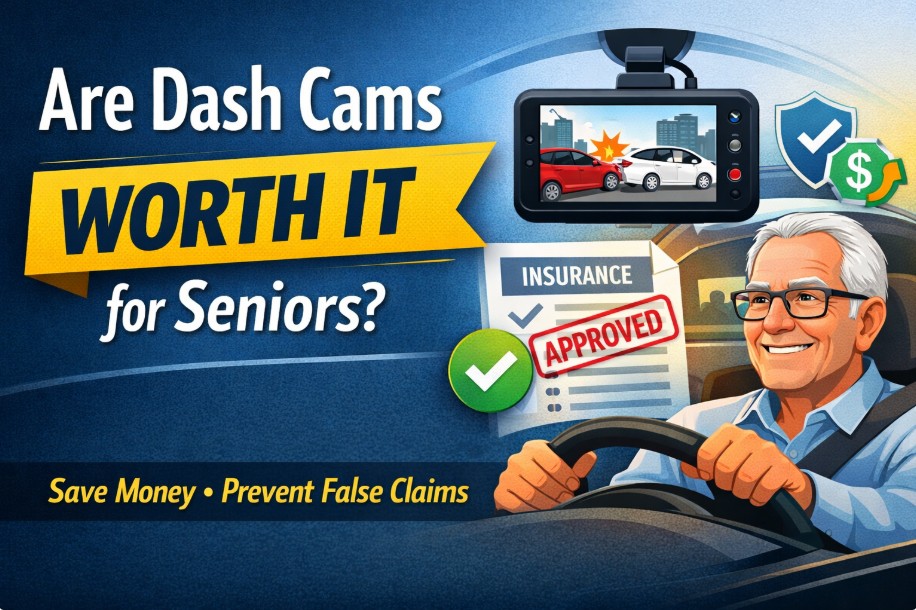
Older drivers often face high car insurance costs, especially on a fixed retirement budget. This raises an important question: might installing a dash cam reduce these expenses?
In the United States, most insurers do not automatically offer discounts for owning a dash cam. While some insurers in other countries may offer discounts, eligibility requirements vary. The main advantage of a dash cam is the footage it records, which can be essential for resolving disputes involving accidents, hit-and-runs, or insurance claims.
This guide explains how a dash cam might help with insurance costs, what it cannot promise, and whether it’s worthwhile for an older driver.
Do Insurers Offer Dash Cam Discounts?
In the United States, installing a dash cam typically does not automatically qualify you for a car insurance discount. Major insurers primarily base premiums on factors such as driving history, location, annual mileage, vehicle type, and past claims.
For example, Progressive confirms it doesn’t offer a dash cam discount, although recorded footage may provide useful evidence for an insurance claim.
Discounts are more often available with certain insurers or specialist policies outside the US, especially in the UK. However, these offers may have conditions, such as the use of an approved camera or a specific installation process.
Before purchasing a dash cam, consult your insurer to see if you can get a discount.
- Do you offer a dash-cam discount?
- Are only certain models accepted?
- Is professional installation necessary for the camera?
- What is the actual savings from the discount?
Always evaluate the full policy price and coverage details. An insurer that provides a dash-cam discount might still have a higher overall charge than one without such a discount.
How Dash-Cam Footage Might Lower Insurance Costs
Even without an explicit discount, dash-cam footage can help insurers understand the events of a disputed incident by providing valuable details that driver statements or photos taken afterward might miss.
Footage can assist in documenting:
- Identify which vehicle changed lanes.
- The traffic light indicating a collision is imminent.
- A vehicle involved in a hit-and-run incident.
- Damage that occurred while your car was parked.
- Unusual behavior observed during a suspected staged accident.
However, video evidence alone does not establish fault or guarantee reimbursement. The insurer reviews it alongside driver statements, photos, police reports, witness accounts, and local traffic laws.
Our guide to the eight best Rexing dash cams explains how these models differ in coverage, video quality, and ease of use, especially when comparing cameras with different recording features.
Limitations of a Dash Cam
Dash-cam footage can support an insurance claim, but it doesn’t determine the insurer’s final decision. Installing a camera cannot guarantee:
- A lower premium.
- A successful claim outcome.
- Reimbursement of your deductible.
- Protection against a future rate hike.
- Quicker resolution of claims.
Video recordings are objective and may show your role in the accident, whether partial or complete. Insurance companies review dash-cam footage alongside police reports, scene photos, witness statements, and traffic laws to assess the situation.
The National Association of Insurance Commissioners also emphasizes that auto insurance rates are influenced by key risk factors, such as your driving history, claims record, geographic location, annual vehicle usage, and policy deductibles.
Having a dash cam alone does not ensure that your insurance costs will remain unchanged, because individual video evidence cannot override these fundamental underwriting criteria.
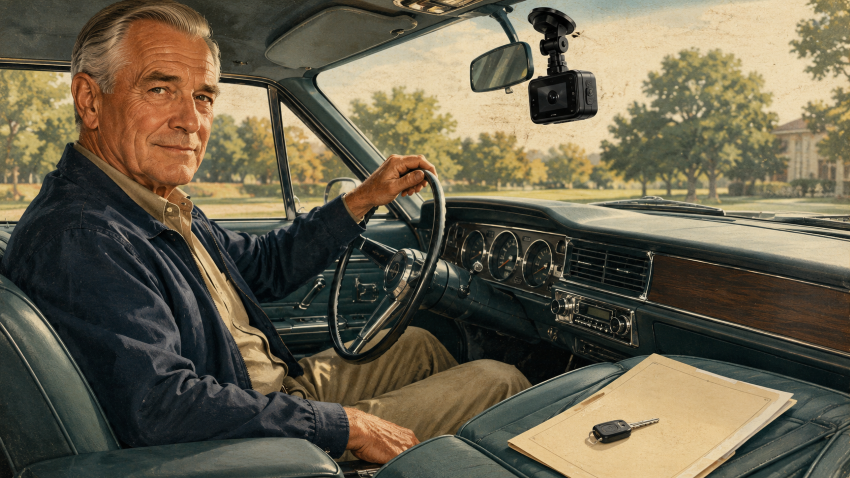
Essential Dash-Cam Features for Insurance Claims.
A dash cam needs to record clear, easily accessible footage to be helpful in an insurance claim. Key features include:
- Clear day-and-night video: Helps identify vehicles, road signs, and traffic signals.
- Automatic recording: Starts when the car is turned on, with no daily setup required.
- Emergency file protection: Ensures that critical footage isn’t overwritten following an impact.
- Front-and-rear coverage: Records incidents both in front of and behind the vehicle.
- Accurate date and time: Offers helpful background information for recording submissions.
- Parking mode: Can record hit-and-runs or vehicle damage when the vehicle is left unattended.
- Simple file retrieval: Facilitates saving and sharing footage with an insurer.
Our review of the top five simple-to-use dash cams for older drivers emphasizes models featuring intuitive controls and automatic recording.
Guidelines for Handling Dash-Cam Footage Post-Incident.
Ensure you save the footage as soon as it is safe, since important recordings can be overwritten once the memory card is full.
- Pause the recording or secure the relevant video file.
- Save a copy on your phone, computer, or an external storage device.
- Maintain the original file without any modifications.
- Record the date, time, location, and details of the incident.
- Take photographs of the vehicles, damage, road conditions, and license plates.
- Check with your insurer about the preferred method for submitting the footage.
- Give the recording to the police if asked.
Do not trim, add captions, or edit the original video in any way. Maintaining an untouched copy ensures its reliability as evidence.
Is a Dash Cam Worth It for Senior Drivers?
A dash cam can be useful for independently documenting accidents, hit-and-runs, or parking damage. However, don’t buy one just to get an insurance discount.
- Think about it before making a purchase.
- The camera is within your budget and doesn’t depend on future savings.
- It automatically records without needing frequent adjustments.
- You can quickly access the footage whenever necessary.
- The interface of the screen or app is simple and easy to navigate.
- The installation won’t block your view or cause any distractions.
The size and controls of cameras can vary significantly. Our comparison between the Garmin Dash Cam Mini 2 and the Nextbase 522GW highlights a small, discreet camera versus a larger touchscreen model, helping you choose which design is more user-friendly for you.
Final Thoughts
In the United States, dash cams typically do not automatically qualify you for a car insurance discount. However, some insurers in other regions may offer such a benefit, though eligibility requirements and conditions can vary.
The primary benefit is the footage it captures. While clear video can help an insurer evaluate a disputed accident, hit-and-run, or parking incident, it does not guarantee a successful claim, reimbursement of a deductible, or protection against increased premiums.
Before purchasing a dash cam, ask your insurer about any discounts and the process for submitting recorded footage. Choose a dash cam primarily for its practical protection features rather than for potential insurance savings.