
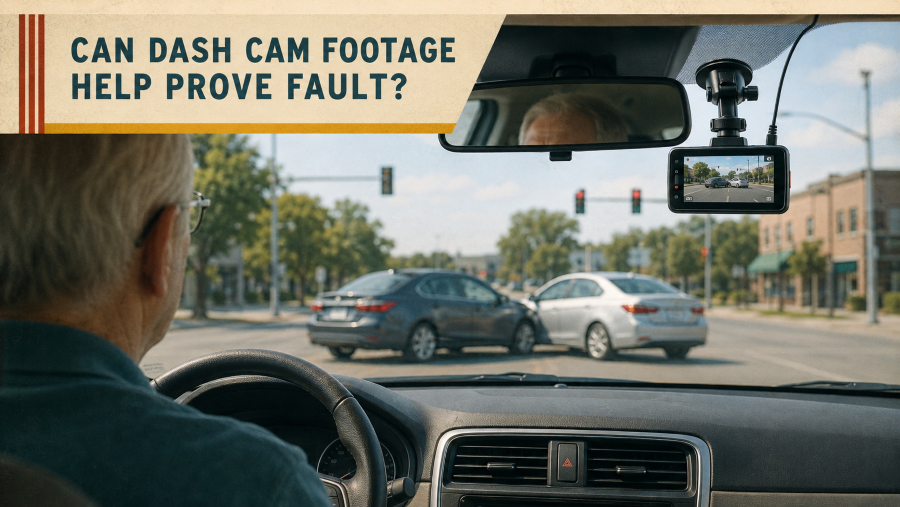
Car accidents often result in conflicting accounts of the event. A dash cam can help by capturing key details such as traffic signals, vehicle behavior, lane positions, and road conditions.
However, footage alone does not automatically establish fault. Insurers, police, and courts often evaluate it alongside driver statements, witness testimony, photographs, police reports, and applicable traffic laws.
This guide outlines when dash cam footage can be helpful, its limitations, and how to preserve it after an accident.
Can Dash-Cam Footage Help Prove Fault?
Dash-cam footage helps reconstruct a collision but does not determine fault on its own. Insurance adjusters and authorities consider it as part of a comprehensive review, evaluating it alongside police reports, statements, and relevant traffic laws.
Useful footage generally includes the following elements:
- Signals & signage: Light cycles, stop signs, and right-of-way rules.
- Positioning: Lane integrity, merging, and sudden movements.
- Driver behavior: Abrupt braking, unsafe turns, or erratic driving.
- Environment: Weather, road hazards, and visibility conditions.
- Fleeing vehicles: Details such as license plates in hit-and-run cases or other identifying information.
The California Department of Insurance notes that claim decisions rely on comprehensive supporting documents and all available evidence. Although clear dash-cam footage can bolster a claim, factors such as awkward mounting angles, missing footage, or low image quality may reduce the credibility or weight that adjusters give to the file.
Understanding Dash-Cam Footage: Capabilities and Limitations
A dash cam records solely what is within its direct view. A typical front-facing camera captures traffic signals, lane markings, vehicle locations, and the moments just before a collision.
Clear footage assists in verifying:
- Intersection priority: Which vehicle entered first.
- Lane integrity: Unannounced or unsafe lane changes.
- Following distance: Vehicle spacing immediately before impact.
- Context: Visible road signs, light cycles, and weather conditions.
A single camera cannot capture side T-bone impacts, rear-end collisions, driver intentions, or anything out of its lens angle. Additionally, issues like glare, motion blur, incorrect date timestamps, or missing audio can diminish its evidentiary reliability.
Check out our guide that compares front-facing, dual-channel, and multi-camera setups across the top eight Rexing dash cams for a broader perspective.
Accidents Where Dash-Cam Footage Is Most Useful
Dash-cam footage is especially useful when accounts conflict or there are no unbiased witnesses.
It helps clarify:
- Intersection collisions: Shows light-cycle or stop-sign violations.
- Unsafe lane changes: Confirms vehicle placement and signals right before impact.
- Rear-end impacts: Proves sudden braking or tailgating.
- Hit-and-runs: Records the license plate or identifying features of the fleeing vehicle.
- Parking incidents: Detects damage to unattended vehicles when parking mode is enabled.
Video establishes the sequence of events, but a single-angle recording may miss some perspectives, and poor quality can reduce its effectiveness.
How Insurers and Police Use Dash-Cam Footage
Insurance adjusters assess video footage along with damage patterns, photos, driver statements, and police reports. Although video can clarify disputed details, the final judgment of fault is based on all evidence and traffic laws.
Progressive notes indicate that dashcam recordings provide important supporting evidence for resolving disputed claims.
Police can utilize clear video footage to:
- Verify sequence: Verify the correct sequence of events.
- Identify drivers: Track vehicles involved in hit-and-run incidents.
- Spot infractions: Verify traffic or right-of-way violations.
- Validate reports: Save the details documented in the official accident report.
Inform the responding officer and your insurer about the footage, but keep the original file accessible in case you need to provide it directly upon request.
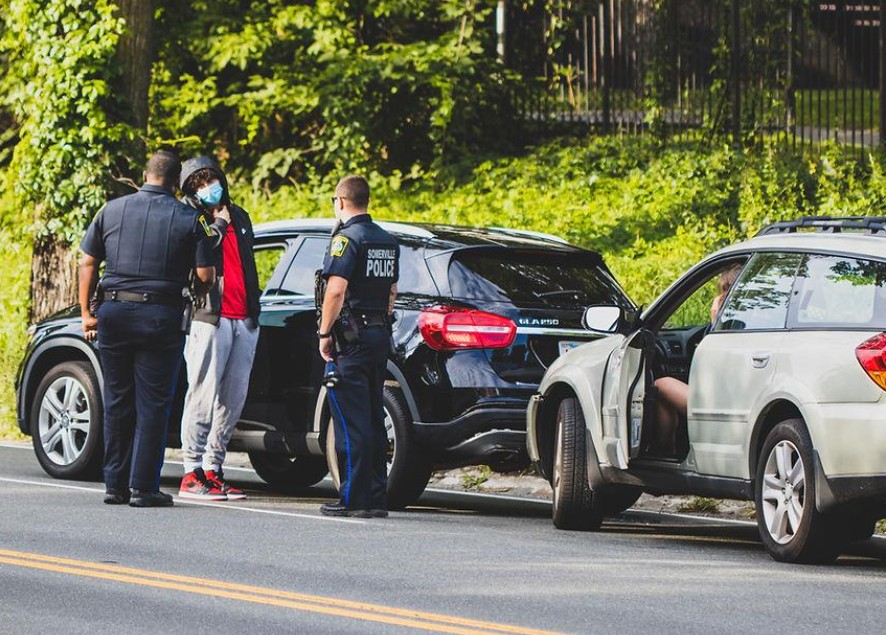
How to Preserve Dash-Cam Footage After an Accident
Save the recording as soon as it is safe. Continuous recording may quickly overwrite important clips if the camera keeps running.
Essential measures to protect your video:
- Lock the file: Save the accident clip directly to the dash cam.
- Back it up: Move a copy to a computer or secure cloud storage.
- Keep the original: Keep the original unedited raw file intact without any trimming or modifications.
- Document details: Record the precise date, time, and place of the incident.
- Share selectively: Share copies solely upon request from your insurer, police, or legal adviser.
Footage can support a claim, but owning a camera alone doesn’t automatically lower insurance premiums. Learn more in our guide: Do dash cams lower insurance costs?
Is dash cam footage admissible as evidence against you?
Yes. Dash-cam footage is impartial evidence, capturing your errors as clearly as others’. It can readily display speeding, tailgating, driver distraction, or running a red light.
To ensure the recording remains credible:
- Preserve originals: Always keep the raw video file unchanged; do not edit, crop, or modify it.
- Do not delete clips: Removing incriminating footage following an accident may result in legal consequences for evidence tampering.
- Keep off social media: Don’t share accident videos publicly online.
- Save full context: Retain the full, unaltered recording, including the moments before the impact.
If your accident results in serious injuries and there is a possible lawsuit or a heavily contested claim, seek advice from a qualified legal professional on how to properly preserve and submit the footage.
Our guide highlights the top five easy-to-use dash cams suitable for older drivers, focusing on models that are simple to operate daily.
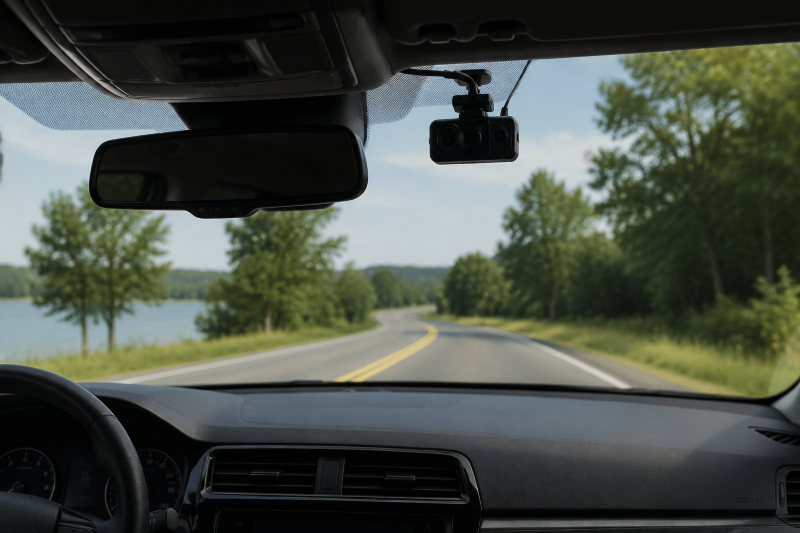
Privacy and Legal Considerations
Dash-cam regulations differ depending on where you are. Rules vary on where you can mount the device, what can obstruct the windshield, whether you need consent to record audio, and how you can share recordings that include people.
Essential checks before recording:
- Windshield rules: Verify local placement regulations, since certain states ban mounting directly on the glass or impose size restrictions.
- Clear view: Place the camera outside your direct line of sight and away from airbag deployment areas.
- Audio consent: Review wiretapping laws: in states with two-party consent, passengers must be informed before any sound recording occurs.
- Public sharing: Be careful when sharing videos online that show faces or license plates.
Final Thoughts: Can Dash-Cam Footage Assist in Establishing Fault?
Dash-cam footage can clarify how an accident happened, especially when driver accounts differ. However, insurers, police, and courts view video as one of multiple evidence sources, not as conclusive proof of fault.
To capture useful footage:
- Position carefully: Mount the camera safely where it isn’t directly visible.
- Confirm operation: Check the unit powers on and records properly before driving.
- Manage storage: Format memory cards regularly to ensure sufficient available space.
- Safeguard files: After an accident, save the original recording immediately without any edits.