
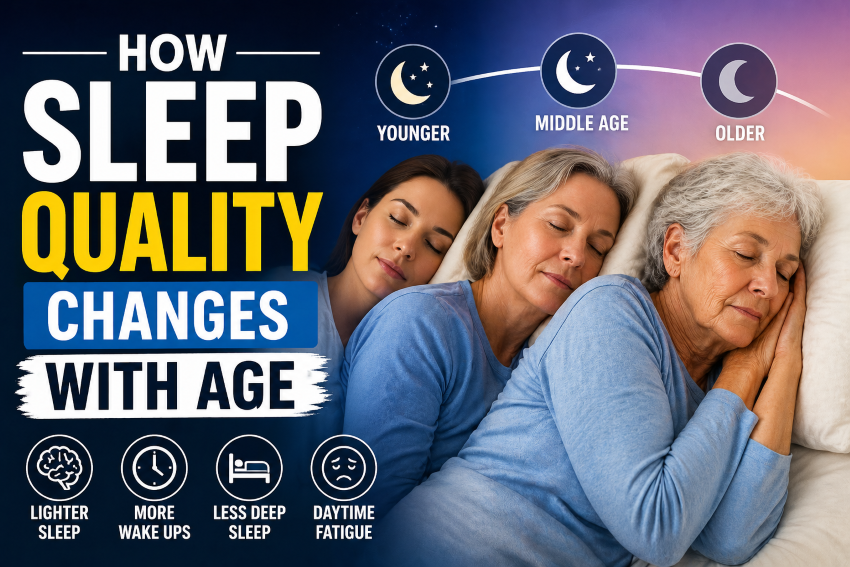
Sleep patterns often change with age, but seniors shouldn’t overlook poor sleep. Many seniors wake more often, sleep more lightly, or feel tired even after adequate rest.
These changes occur because aging affects the body’s internal clock, sleep cycles, and deep sleep. However, sleep issues can also stem from stress, medications, pain, or conditions such as sleep apnea.
This guide outlines how sleep quality changes with age, what seniors typically experience, and when poor sleep may indicate other health issues.
Why Sleep Quality Changes With Age
Sleep quality declines with age as the body’s sleep patterns become lighter and more fragmented. Many older adults spend less time in deep sleep, the stage crucial for feeling restored.
The body’s internal clock can also change with age, which is why some older adults tend to feel sleepy earlier in the evening and wake up earlier in the morning.
Pain, medication, stress, or bathroom visits can interrupt sleep, making it feel less restful even if a senior spends enough hours in bed.
Why Sleep Quality Changes With Age?
Sleep quality tends to decline with age because the body’s sleep system becomes less stable and less restorative over time. These changes are a natural part of aging, but they can cause sleep to feel lighter and more fragmented.
The body spends less time in deep sleep, which is essential for physical recovery. At the same time, the internal clock shifts, causing many seniors to feel sleepy earlier and wake up sooner.
Key reasons include:
- Reduced deep sleep: Seniors experience shorter periods of deep, restorative sleep, resulting in less refreshing rest.
- Changes in circadian rhythm: The body’s internal clock advances, causing people to go to bed and wake up earlier.
- Lower melatonin production: As we age, the hormone that regulates sleep declines, making it harder to fall and stay asleep.
- More frequent interruptions: Pain, medications, or the need to use the bathroom during the night can disrupt sleep.
- Lighter sleep overall: Older adults tend to wake more easily due to noise or movement.
These changes help explain why older adults often feel their sleep is lighter or more fragmented, even when they spend enough time in bed.
The National Institute on Aging notes that older adults typically spend less time in deep and REM sleep and may wake up more often during the night, even though they still need about the same total amount of sleep as younger adults.
Circadian Rhythm Changes With Age.
Decreased melatonin production, the hormone that signals it’s time to sleep, often drives this shift.
In many older adults, the circadian rhythm shifts earlier, causing them to feel sleepy earlier in the evening and wake up earlier in the morning.
This pattern might be mistaken for insomnia, but it is actually a natural part of aging. As eyes age, they become less sensitive to light, which can weaken the signals that help synchronize the internal clock with day and night. This makes sleep timing more vulnerable to disruption.
- These circadian changes help explain why seniors may struggle to stay asleep late at night or feel alert very early in the morning.
- They also highlight why the sleep environment, light exposure, and nighttime comfort become more important to sleep quality as we age.
This guide on how natural materials support better sleep for older adults explains why comfort, breathability, and gentle fabrics become increasingly important with age.
Why Sleep Becomes More Fragile With Age.
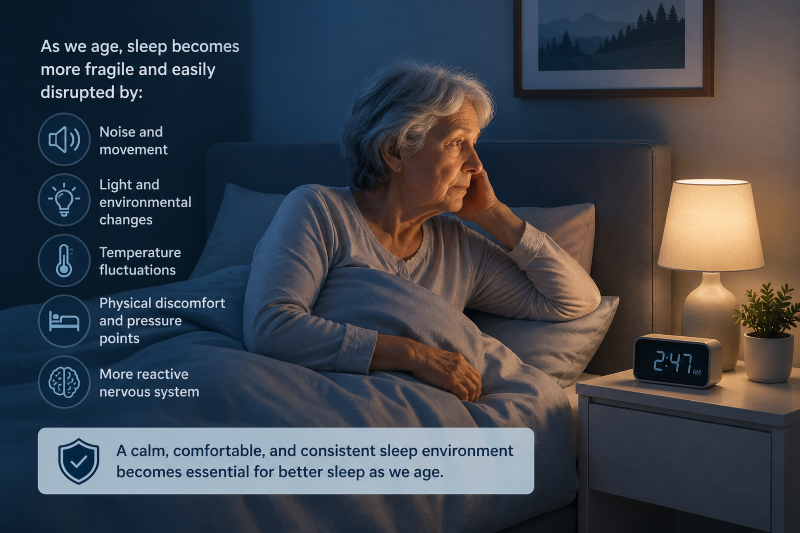
As we age, our sleep tends to become lighter and more easily disturbed by small environmental changes. This can cause interruptions and decrease overall sleep quality.
Key reasons include:
- More reactive nervous system: The brain reacts more quickly to noise, light, or movement, leading to more frequent awakenings.
- Less deep sleep: Waking up from minor disturbances becomes easier when restorative sleep duration is shortened.
- Increased sensitivity to discomfort: Temperature fluctuations, pressure points, or uncomfortable materials can now more readily disturb sleep than before.
- Environmental factors matter more: Light, noise, and room comfort have a greater impact on uninterrupted sleep.
As a result, establishing a stable, quiet, and comfortable sleep environment becomes increasingly important with age due to this heightened fragility.
The Sleep Foundation notes that, for older adults, a sleep environment that minimizes disruptions from noise and light is crucial due to lighter sleep and increased sensitivity.
The Sleep Foundation highlights that lighter sleep, more frequent awakenings, and greater sensitivity to noise and light make the sleep environment increasingly crucial for older adults.
How Body Temperature Affects Sleep With Age.
- The body becomes less efficient at regulating its core temperature during the night.
- Seniors may wake up because they feel too hot, too cold, or uncomfortable.
- Temperature-related discomfort can disrupt sleep, particularly during seasonal transitions.
- These factors influence how the body keeps or releases heat while sleeping.
- Inadequate temperature regulation can impair restorative sleep quality, even with adequate total sleep duration.
- Breathability, airflow, and temperature regulation are crucial for improved sleep quality.
How Sensitivity to Environment Affects Sleep With Age
- Increased skin sensitivity: Aging skin becomes thinner, drier, and more prone to irritation.
- Discomfort from contact and materials: Friction, heat, or certain fabrics can trigger irritation and cause micro-awakenings.
- Respiratory sensitivity: A greater reaction to dust, allergens, or other airborne irritants can lead to congestion or coughing at night.
- More frequent subtle disruptions: Small disturbances may seem minor but can repeatedly interrupt sleep.
- Reduced ability to filter stimuli: The brain becomes more sensitive to touch, temperature, and pressure during sleep.
- Greater impact of the environment on sleep: Comfort, materials, and air quality play a bigger role in maintaining restful sleep.
- Need to minimize irritation: Reducing sensory disturbances supports more consistent, restorative sleep.
This guide to the seven top-rated massager machines for pain relief can also help you explore simple, non-invasive options that promote relaxation before bedtime.
Why Comfort Becomes a Health Issue, Not a Luxury.
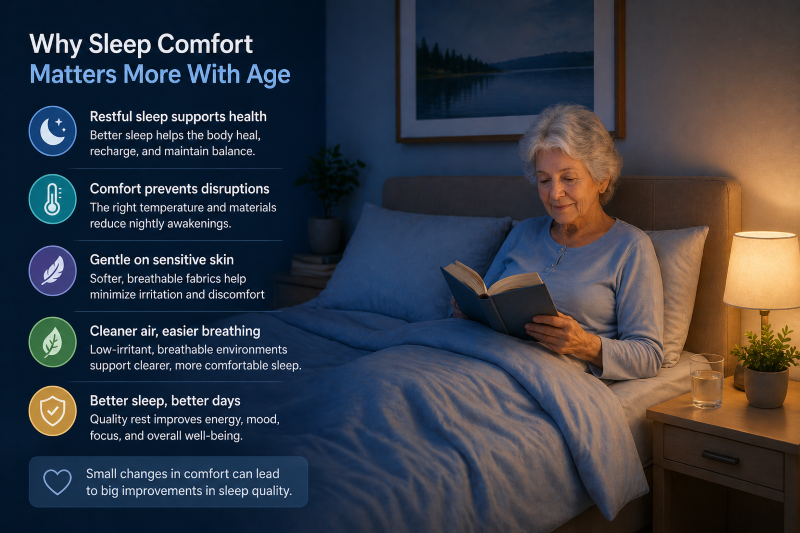
- Sleep quality affects daily functioning: Poor sleep can reduce energy, focus, and mood.
- Higher risk of fatigue and falls: Interrupted sleep may increase daytime fatigue and fall risk.
- Impact on cognitive health: Light, fragmented sleep can affect memory and concentration.
- Recovery becomes more important: Aging muscles and joints rely on consistent, restful sleep.
- Small discomforts add up: Minor issues like temperature or irritation can significantly reduce sleep quality over time.
Normal Sleep Aging vs. When to Seek Help
Some shifts in later life are a regular part of aging, while others may signal an underlying issue that deserves attention.
- Regular age-related changes include:
- Lighter sleep
- Earlier bedtimes and wake-up times
- Brief awakenings during the night
- Sleep changes that should not be ignored:
- Persistent exhaustion despite enough time in bed
- Loud snoring or breathing pauses
- Ongoing anxiety or racing thoughts that prevent sleep
- Sleep problems that worsen quality of life
- Stress and nervous system overload matter.
Chronic stress can keep the body in a constant state of alertness, making it difficult to fall or stay asleep, especially as the nervous system becomes more sensitive with age.
If stress or tension contributes to poor sleep, calming the nervous system can complement improving the sleep environment.
The Pulsetto Vagus Nerve Stimulator Review explains why this device is worth considering for older adults seeking to support relaxation and improve sleep quality without medication.
Final Thoughts on How Sleep Quality Changes With Age.
As people age, sleep quality naturally evolves, often becoming lighter, more sensitive, and more prone to disruption. Recognizing these changes helps seniors adjust their expectations and focus on what truly improves rest.
- Work with your body, not against it: Adapting to new sleep patterns can reduce frustration and improve consistency.
- Comfort matters more than ever: A stable, quiet, and temperature-controlled environment can greatly enhance sleep quality.
- Small changes make a real difference: Reducing noise, improving airflow, and choosing comfortable materials can improve sleep quality over time.
- Understanding reduces sleep anxiety: Knowing what is normal can prevent unnecessary stress that might otherwise interfere with sleep.
Getting better sleep as you age isn’t about perfection but about creating the right environment for consistent, restorative rest.