
Ensuring safety remains a major concern for many seniors, especially those living alone or managing health issues. Currently, technology offers two primary options for emergency assistance: smartwatches and medical alert devices.
Although both are intended to enhance safety, they operate differently and may not be equally suitable for all older adults.
Smartwatches offer advanced features such as fall detection and emergency alerts, but they require touchscreens, regular charging, and initial setup.
On the other hand, medical alert devices are designed for emergencies and typically include simple buttons and around-the-clock monitoring.
This guide contrasts smartwatches and medical alert devices solely from a safety standpoint. It assesses reliability, user-friendliness, fall detection, and real emergency response to help seniors and caregivers choose the safer option, taking into account personal needs, capabilities, and living circumstances.
What Does Safety Mean for Seniors Using Technology?
In the context of senior tech, especially devices designed for emergencies, the term encompasses several key factors that matter in real-world use, rather than just marketing claims.
Understanding these factors helps you assess whether a smartwatch or medical alert system will effectively protect a senior when it matters most.
Emergency response speed and reliability.
A crucial aspect of safety is how quickly help arrives following an incident. Medical alert systems typically rely on round-the-clock professional monitoring to promptly contact emergency services or family members whenever a button is pressed or a fall is detected.
Studies and consumer reviews indicate that these systems enable quick access to emergency contacts, reducing the time a senior spends alone after a fall or health incident.
Ease of use during stress or confusion.
In an emergency, simplicity counts. Devices with few buttons or intuitive interaction make it easier for older adults, especially those with limited tech experience or cognitive challenges, to get help quickly.
Wearable pendants and wrist units for medical alert systems typically score higher on ease of use because their interfaces are purpose-built for emergencies.
Fall detection accuracy and limitations.
Many smartwatches feature automatic fall detection, which can be useful, but studies show that sensor-based fall detection systems are not uniformly effective.
Some achieved high specificity and reasonable accuracy in controlled settings, but they can still miss falls or generate false alarms in uncontrolled settings.
Medical alert systems with dedicated fall detection are typically designed for that purpose and often connect directly to monitoring centers that can confirm and respond, which may offer more reliable real-world performance.
Battery life and device reliability.
Safety is about whether the device works when needed. Medical alert devices often have longer battery life and dedicated connectivity.
Smartwatches often need to be charged and may require a connected smartphone to access full features, which could affect their reliability in real emergencies.
How Safe Are Smartwatches for Seniors?
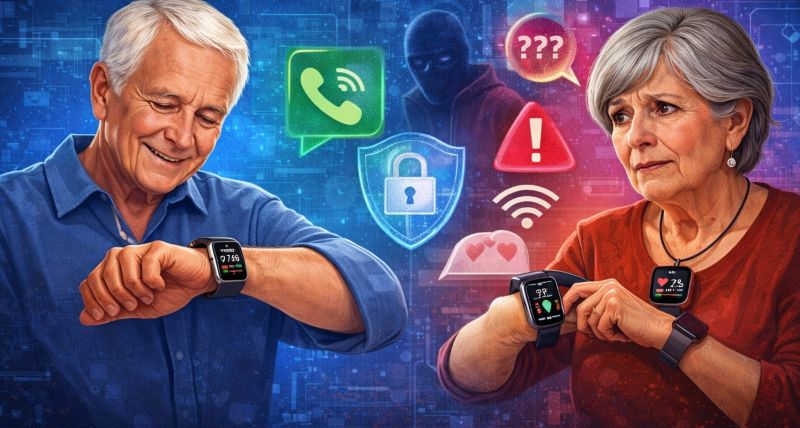
When assessing smartwatches for senior safety, it’s essential to look beyond marketing claims and evaluate their capabilities in emergencies, particularly in fall detection, emergency notifications, and day-to-day use.
How does fall detection work on smartwatches?
Modern smartwatches, such as Apple Watch, Samsung, and Wear OS devices, include automatic fall detection that uses motion sensors to detect a hard impact followed by a period of inactivity.
The watch can automatically call emergency services or preset contacts if it dectects fall, but this feature is not perfect.
Research shows that wearable fall-detection systems can be reasonably accurate in controlled settings, but their effectiveness varies widely depending on the type of fall and how the device is worn.
Emergency SOS features and their limits.
Smartwatches often include an Emergency SOS feature that can contact emergency services without requiring manual dialing, which can be helpful for seniors who are comfortable with technology.
However, it still relies on proper setup, reliable connectivity (cellular or paired phone), and the wearer’s ability to trigger it if automatic fall detection fails to activate.
Usability challenges for older adults.
Smartwatches are versatile devices featuring touchscreens, apps, and settings that might confuse some older users.
Seniors with limited tech experience, vision problems, or joint issues may find it challenging to navigate menus or remember charging routines.
This may reduce the likelihood that the device is worn regularly or properly configured, both of which are essential for the safety features to work as intended.
Battery, charging, and connectivity concerns.
Unlike dedicated safety hardware, many smartwatches require daily charging, and some features rely on a connected smartphone.
Seniors who forget to charge their watch or leave their paired phone behind may be unable to access emergency features when they need them most.
Safety strengths of smartwatches.
- Smartwatches offer a range of health-tracking features beyond emergency response.
- Provide automatic fall detection and SOS calling.
- Familiar form factor (wrist-worn, like a traditional watch).
Safety weaknesses of smartwatches.
- Fall detection accuracy can vary widely depending on conditions and wrist motion patterns.
- Secondary to general smartwatch functions, not purpose-built for emergencies.
- Require regular charging and correct setup for full functionality.
Some Apple Watch models can also work independently with cellular plans, as explained in this guide to Apple Watches on Visible by Verizon for seniors.
How Safe Are Medical Alert Devices for Seniors?
Medical alert devices offer assistance, are easy to use, and provide reliable monitoring, making them suitable for seniors living alone or with health concerns, unlike smartwatches.
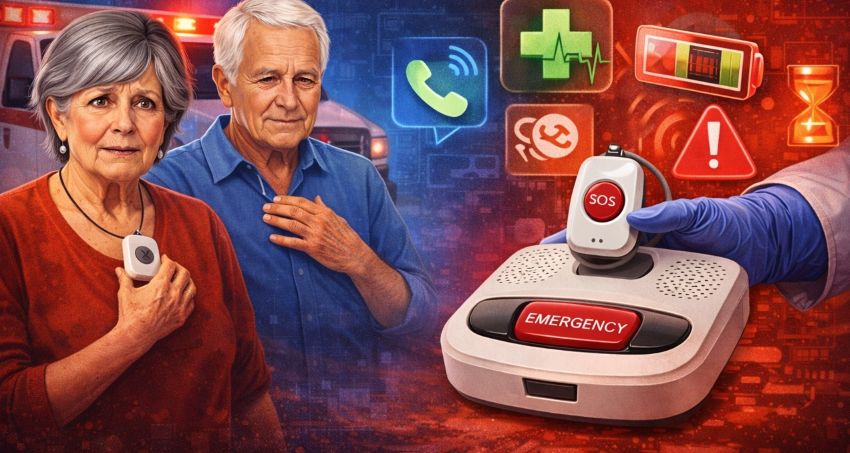
One-button emergency response systems.
Most medical alert devices feature a large, easy-to-press button worn as a pendant or on a wristband. During an emergency, pressing this button instantly connects the user to a monitoring center.
This simplicity provides a significant safety benefit, particularly in moments of panic, pain, or confusion when using a touchscreen can be challenging.
24/7 monitoring centers and human response.
24/7 human monitoring is an essential safety feature of medical alert systems. A trained operator responds promptly, assesses the situation, and contacts emergency services or caregivers as needed when an alert is triggered either manually or automatically.
- This human layer reduces the risk of missed or misunderstood alerts.
- Some services, such as Emergency Assistance Plus, combine emergency coordination with added support features.
Automatic fall detection in medical alert devices.
Many medical alert devices also feature dedicated fall-detection sensors specifically designed for this purpose. While no system is flawless, these devices are optimized to detect sudden changes in motion and position and are directly connected to monitoring centers that can verify whether assistance is required.
This is particularly crucial if a senior is unconscious or can’t press the emergency button.
Battery life and cellular reliability.
- Medical alert devices usually feature longer battery life than smartwatches, often lasting several days or weeks between charges.
- Many also include built-in cellular connectivity, allowing them to operate independently of a smartphone.
- This improves reliability in real emergencies, particularly for seniors who may forget to charge devices or leave their phone in another room.
Safety strengths of medical alert devices.
- Designed exclusively for emergencies.
- Simple operation with minimal learning curve.
- 24/7 human monitoring.
- Longer battery life and dependable connectivity.
Safety weaknesses of medical alert devices.
- Limited health or lifestyle features.
- Monthly subscription costs.
- Some seniors dislike wearing pendants.
Some services, such as Emergency Assistance Plus, offer added emergency coordination features, as explained in the Emergency Assistance Plus review.
Smartwatches vs. Medical Alert Devices: A Safety Comparison.
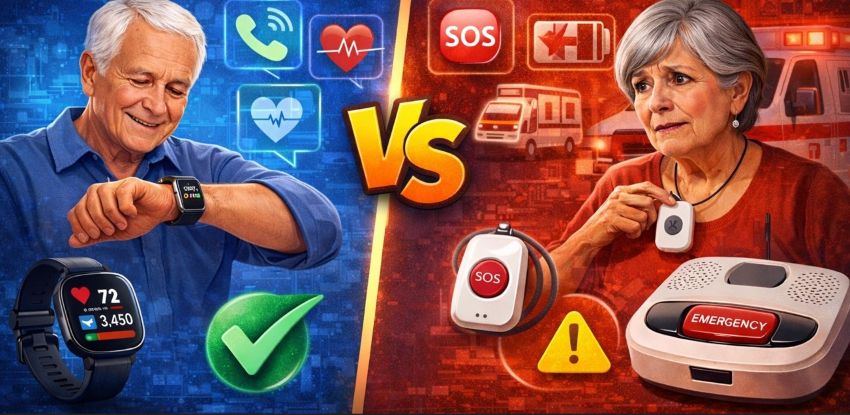
Both smartwatches and medical alert devices can improve senior safety by protecting them in different ways. This comparison focuses only on real emergency performance, not lifestyle or additional features.
Emergency response time.
- Medical alert devices connect directly to a 24/7 monitoring center.
- A human operator can assess the situation and dispatch help immediately.
- Smartwatches can call emergency services, but the response depends on:
- Correct setup.
- Cellular or phone connectivity.
- Automatic detection or manual activation.
Ease of use in real emergencies.
- Medical alert devices typically require one large button press.
- Straightforward during stress, pain, or confusion.
- Smartwatches may require:
- Touchscreen interaction.
- Specific gestures.
- Navigating menus.
Fall detection reliability.
- Both options offer fall detection, but accuracy varies.
- Smartwatches may:
- Miss slow or controlled falls.
- Trigger false alarms.
- Medical alert devices include dedicated fall detection and connect directly to monitoring centers for confirmation.
Monitoring: automated alerts vs human operators.
Smartwatches rely mainly on automated alerts and emergency calls.
- Medical alert devices include human monitoring, adding safety when a senior:
- Cannot speak.
- Is confused.
- Is unconscious.
Battery life and maintenance.
- Smartwatches usually require daily charging.
- Medical alert devices often last for days or weeks on a single charge.
- Longer battery life reduces the risk of the device failing during an emergency.
This guide also examines the top emergency multi-tools for home, car, and travel use.
Real-Life Safety Scenarios for Seniors.
- Seniors living alone.
- Medical alert devices provide constant monitoring and fast human response.
- Smartwatches may help, but only if worn, charged, and correctly set up.
- Seniors with memory or cognitive challenges.
- One-button medical alert devices are easier to use when users are confused.
- Smartwatch screens and gestures can be difficult to remember in emergencies.
- Active seniors who go outdoors.
- Smartwatches offer mobility and GPS features for outdoor use.
- Some medical alert devices are limited to home or local coverage areas.
- Night-time falls and in-home emergencies.
- Medical alert pendants are often worn 24/7, including during sleep.
- Smartwatches may be removed at night for charging.
- Seniors who forget to charge devices.
- Medical alert devices typically last for days or weeks on a single charge.
- Smartwatches may stop working if daily charging is missed.
Which Option Is Safer Depends on the Senior?
- Tech-comfortable seniors.
- Smartwatches are safe if worn consistently and charged daily.
- Best suited for seniors who are comfortable with touchscreens and settings.
- Seniors with medical conditions.
- Medical alert devices are often safer because they provide constant monitoring.
- Human operators can assess situations and quickly contact help.
- Seniors living alone.
- Medical alert devices provide stronger safety coverage.
- Simple one-button access reduces risk during emergencies.
- Seniors with caregivers monitoring.
- Smartwatches can be useful when paired with caregiver apps.
- Medical alert systems offer added reassurance through 24/7 response centers.
FAQs About Smathwatcjehs Vs. Medical Alert Systems.
Are smartwatches reliable for senior emergencies?
They can assist, but their reliability depends on proper setup, charging, and activation of fall detection. Caregivers often prefer medical alert devices because of human monitoring and simpler operation.
Do medical alert devices work outside the home?
Many contemporary systems provide mobile coverage, though access varies by provider and plan. Some seniors use a smartwatch for daily activities and a medical alert device for home safety.
Final Thoughts: Choosing the Safer Option for Seniors.
There isn’t one universally safest choice for all seniors. While smartwatches and medical alert devices both offer safety benefits, they serve different needs.
The best option varies based on a senior’s health, lifestyle, tech comfort, and need for continuous monitoring. Understanding these differences enables seniors and caregivers to make safer, more informed choices.