


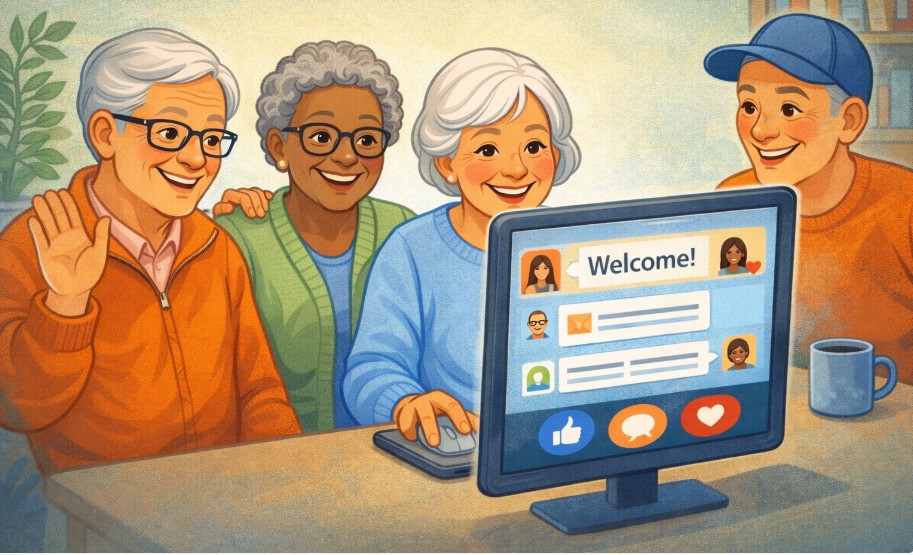
Online communities provide seniors with an easy way to stay socially connected, share interests, and access support from home.
These communities can include discussion forums, Facebook groups, or platforms tailored to seniors, where individuals connect around common hobbies, experiences, or life stages.
This guide explains what online communities are, helps you choose the right one, and provides step-by-step instructions for joining, all in clear, practical language.
It also offers important safety tips to help you participate with confidence and protect your personal information online.
What Are Online Communities?
Online interaction helps older adults stay in touch with friends and family, maintain regular communication, and reduce feelings of loneliness and isolation, especially when physical contact isn’t easy.
A PubMed Central study shows that social interaction and connection, including through online communities, can support emotional well-being and reduce feelings of isolation in older adults.
Online communities help to:
- Find emotional support from people who understand similar life experiences
- Share interests and hobbies with like-minded members
- Access information and advice on topics that matter, such as health or caregiving
A strong online network can offer social stimulation and reduce isolation for older adults.
Joining an online community can feel like having a club that’s open 24/7 for seniors who get out as often as they’d like. Ensure you can access your computer, tablet, or smartphone.
Follow these steps whether you’re joining a Facebook group, a discussion forum, or a senior-focused platform.
How to Join an Online Community?
Step 1: Choose the Right Platform.
- Decide what type of community you want.
- Social connection and hobbies.
- Health or caregiving support.
- Local or senior-specific groups.
- Choose a trusted platform.
- Facebook Groups.
- Well-known senior forums.
- Reputable senior websites.
Step 2: Create an Account.
- Provide basic information only.
- Name (or username).
- Email address.
- Password.
- Follow on-screen instructions.
- Confirm your email if requested.
Step 3: Search for Communities.
- Use the search bar on the platform.
- Type keywords related to your interest.
- “Gardening for seniors”.
- “Retirement hobbies”.
- “Caregiver support”.
- Review group descriptions and rules.
Step 4: Request to Join.
- Click “Join” or “Sign Up”.
- Some groups ask simple questions.
- Reason for joining.
- Agreement to group rules.
Step 5: Wait for Approval (If Required).
- Private groups may take time to approve.
- Moderator approval usually means.
- Better safety.
- Less spam.
Step 6: Introduce Yourself.
- Write a short, friendly message.
- First name.
- Interests or reason for joining.
- Example:
- “Hello, my name is Mary. I enjoy gardening and look forward to learning from everyone.”
Step 7: Participate at Your Own Pace.
- Start by reading posts.
- Comment when you feel comfortable.
- Share only what you choose.

Staying Safe in Online Communities.
Online communities can be positive and supportive, but it’s important to protect yourself while participating.
Protect Your Personal Information.
- Do not share sensitive details.
- Home address.
- Phone number.
- Banking or payment information.
- Use only your first name or a username if you prefer privacy.
Be Careful with Links and Messages.
- Avoid clicking links shared by strangers.
- Do not download files from people you don’t know.
- Be cautious about private messages requesting urgent action.
Watch Out for Scams.
- Be alert if someone asks for money or gifts.
- Be suspicious of emotional stories followed by financial requests.
- Legitimate communities do not pressure members for payments.
Choose Well-Moderated Communities.
- Look for clear rules and guidelines.
- Prefer groups with active moderators.
- Moderators help remove spam and inappropriate content.
Trust Your Instincts.
- Leave a group if something feels uncomfortable.
- You are never obligated to stay or respond.
- Safe communities feel respectful and welcoming.
Senior Tip: Treat online communities like real-life clubs and be friendly, but take time to build trust.
You can also check out our guide on how seniors can avoid scams and fraud, offering practical safety tips to help you stay safe online.
FAQs About Online Communities for Seniors.
Are online communities free to join?
Some niche communities may offer paid features, but participation in basic discussions and connections is always free. Read the group description and rules before joining.
Do I need to be tech-savvy to join an online community?
You only need basic skills such as using a mouse or touchscreen, typing simple messages, and clicking buttons like “Join” or “Comment.” Many platforms also offer help pages or basic instructions.
What if I don’t feel comfortable sharing personal information?
You can use just your first name or a username, avoid posting photos, and opt out of answering personal questions. Many seniors prefer to start by reading posts and gradually participate once they feel at ease.
How do I know if an online community is safe?
Safe communities typically feature well-defined rules, active moderation, and respectful dialogue. Indicators of potential issues include persistent spam, solicitations for money, or coercive requests for personal information. It’s advisable to exit any group that makes you feel uneasy or unsafe.
Can I leave an online community at any time?
You can always leave a group; most platforms offer an easy “Leave Group” or “Unsubscribe” option. It’s completely normal to exit a community that no longer feels useful or enjoyable.
Can online communities really help reduce loneliness?
Many seniors discover that participating regularly in online communities helps them feel more connected, heard, and supported. Sharing experiences, hobbies, or daily thoughts can foster meaningful social bonds, even when people do not meet face-to-face.
How much time should I spend in online communities?
Some seniors log in for a few minutes daily, while others engage in longer chats. Taking breaks and using online communities as part of your daily routine is healthy, not something you feel obligated to do.
Is it safe to move conversations from online to real life?
Don’t rush to share your contact details or set up in-person meetings. Ensure a trusted family member is with you, and choose a public location if you decide to meet someone.
Those who enjoy reading or group activities can also find our guide on how seniors can discover and join virtual book clubs and interest groups tailored to their hobbies useful.
Final Thoughts.
Online communities can be crucial in assisting seniors to remain socially connected, mentally engaged, and emotionally supported.
Whether you participate in a group to share hobbies, seek advice, or just enjoy casual chats, these communities provide a convenient way to connect from home.
Choosing well-moderated groups, joining at your own pace, and following basic safety practices help you enjoy the benefits of online interaction while safeguarding your privacy. Begin with a community aligned with your interests and let your involvement develop organically.